
ITEM#-018: Sweety Blue Drops
Stabilization Criteria
ITEM#-018 inventory lots must be permanently sealed inside airtight, humidity-controlled polycarbonate lockers within Sector-04. The ambient storage temperature must remain strictly below 16 degrees Celsius to prevent the anomalous compound's surface layer from liquefying or releasing airborne chemical particulates into the ventilation network.
Because the item's precise manufacturing source and molecular lineage are entirely unverified, personnel are strictly forbidden from touching individual units without utilizing heavy, chemical-resistant Teflon tools. Breakroom storage, kitchen placements, and oral ingestion tests are completely prohibited. Any staff member showing localized blue staining across their fingers or palate must face immediate bio-hazard quarantine.
Description
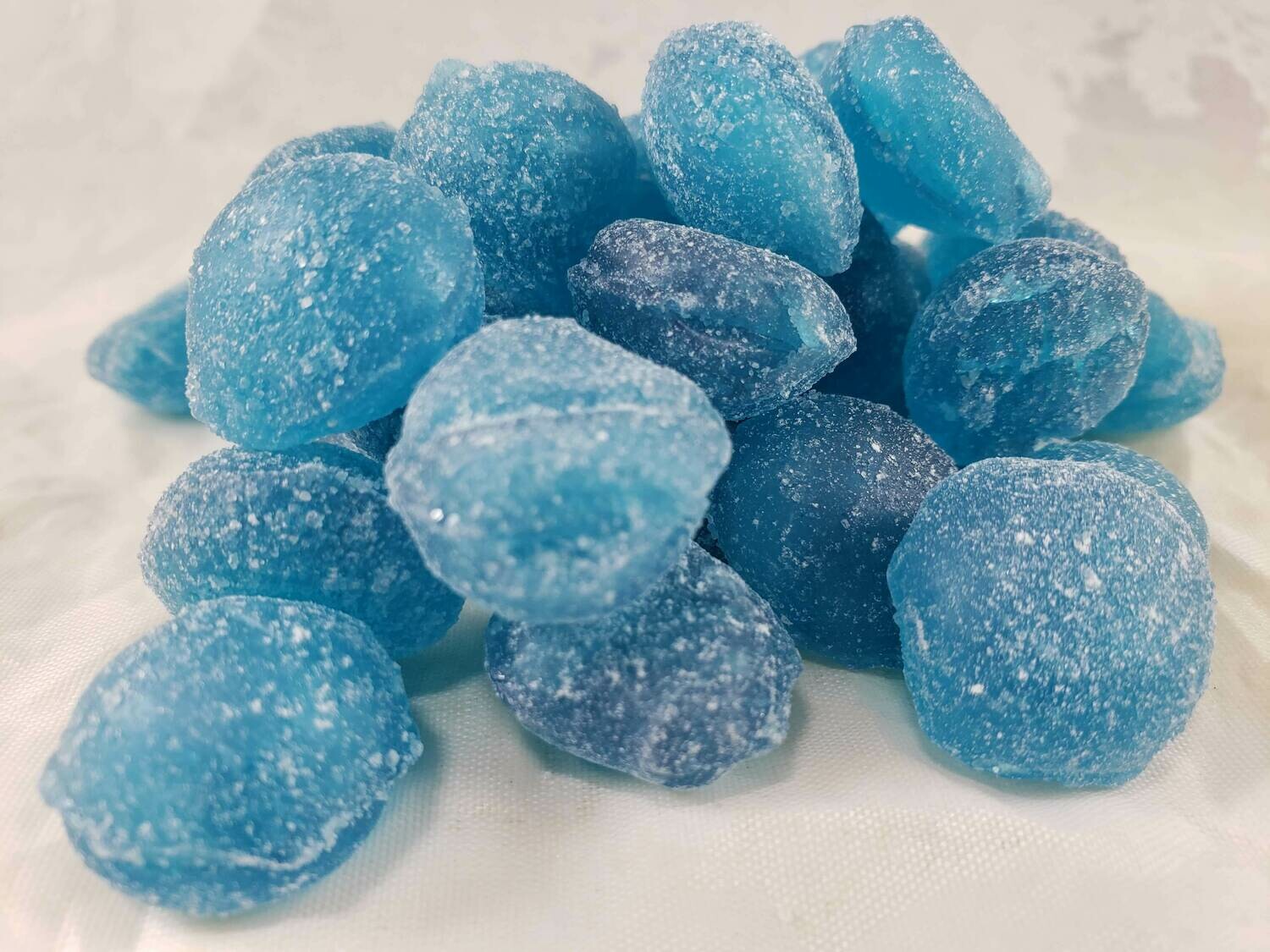
ITEM#-018: A physical consignment of loose, unbranded hard confections of completely unknown origin. Structurally, the items appear designed to perfectly mimic commercial 1990s old-fashioned blue-raspberry hard candy drops to encourage accidental human consumption. Each specimen presents a molded, oval disk shape with a deep cerulean tint, entirely coated in a crystalline, white powder matrix resembling standard sanding sugar. The items lack any legitimate industrial stamps, brand markers, or manufacturing barcodes.
The anomaly functions as a parasitic biological vector that triggers upon oral ingestion. Once a unit of ITEM#-018 is swallowed, the parasitic entity releases a chemical compound that aggressively targets the human respiratory system, causing the victim's airway to systematically deplete of oxygen. As the subject approaches total unconsciousness from asphyxiation, the parasite initiates its primary reproductive phase within the circulatory system.
During this threshold, the parasite's unclassified cellular structures rapidly attack and replace the host's natural red blood cells with its own unknown, blue-pigmented cell variants. This total systemic replacement forces the dying victim to violently cough up dense, vibrant blue blood instead of red. Upon exposure to open atmosphere, this expelled blue blood rapidly calcifies, hardens, and molds into pristine, sugar-dusted drops of ITEM#-018. This predatory replication process is confirmed to be the exclusive method by which the candy is manufactured.